Timeline
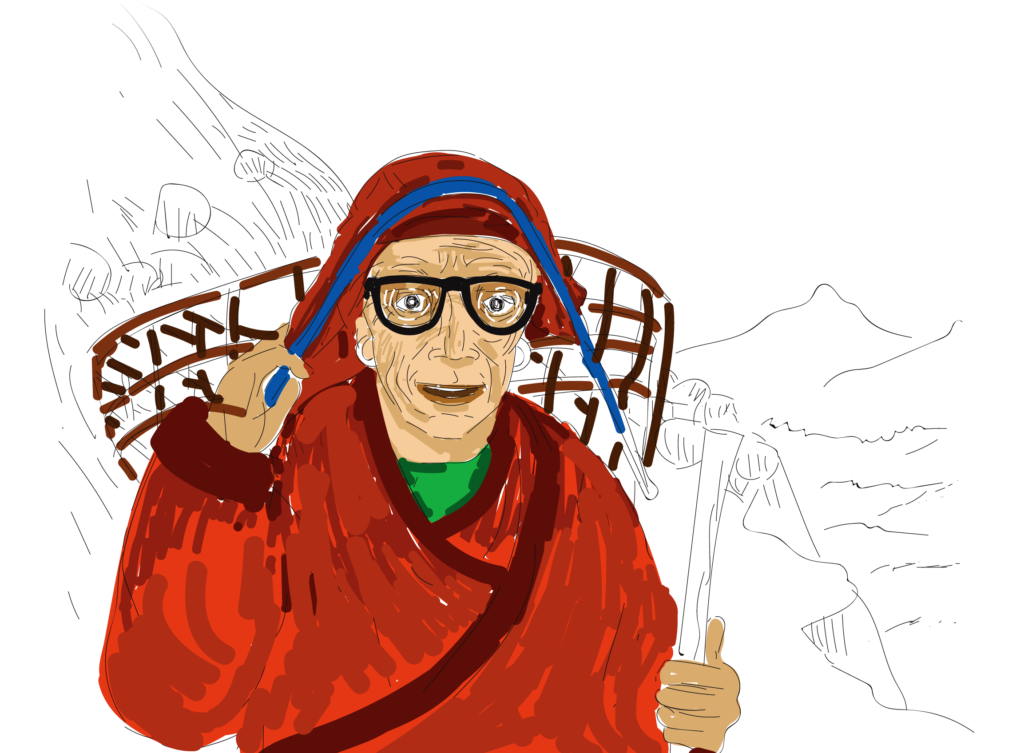
1985 - 1990: Identifying the challenges
During the 80s, Nepal, and many other countries were still practicing the old form of cataract surgical technique of not using intraocular lenses after removal of cataracts. The patient would have to wear thick coke-bottle glasses – which were highly inconvenient, and the patient would still not be able to see clearly.
Inco-ordination
60% without glasses
6% cause of blindness due to bad surgery
For someone living in the remote outback of the developing world – such visual impairment would lead to accidents and injuries.
Inspired by the above, Dr Ruit initiated cataract surgery with intraocular lens implantation and began work towards clearing the barriers for application of such surgery in the community.
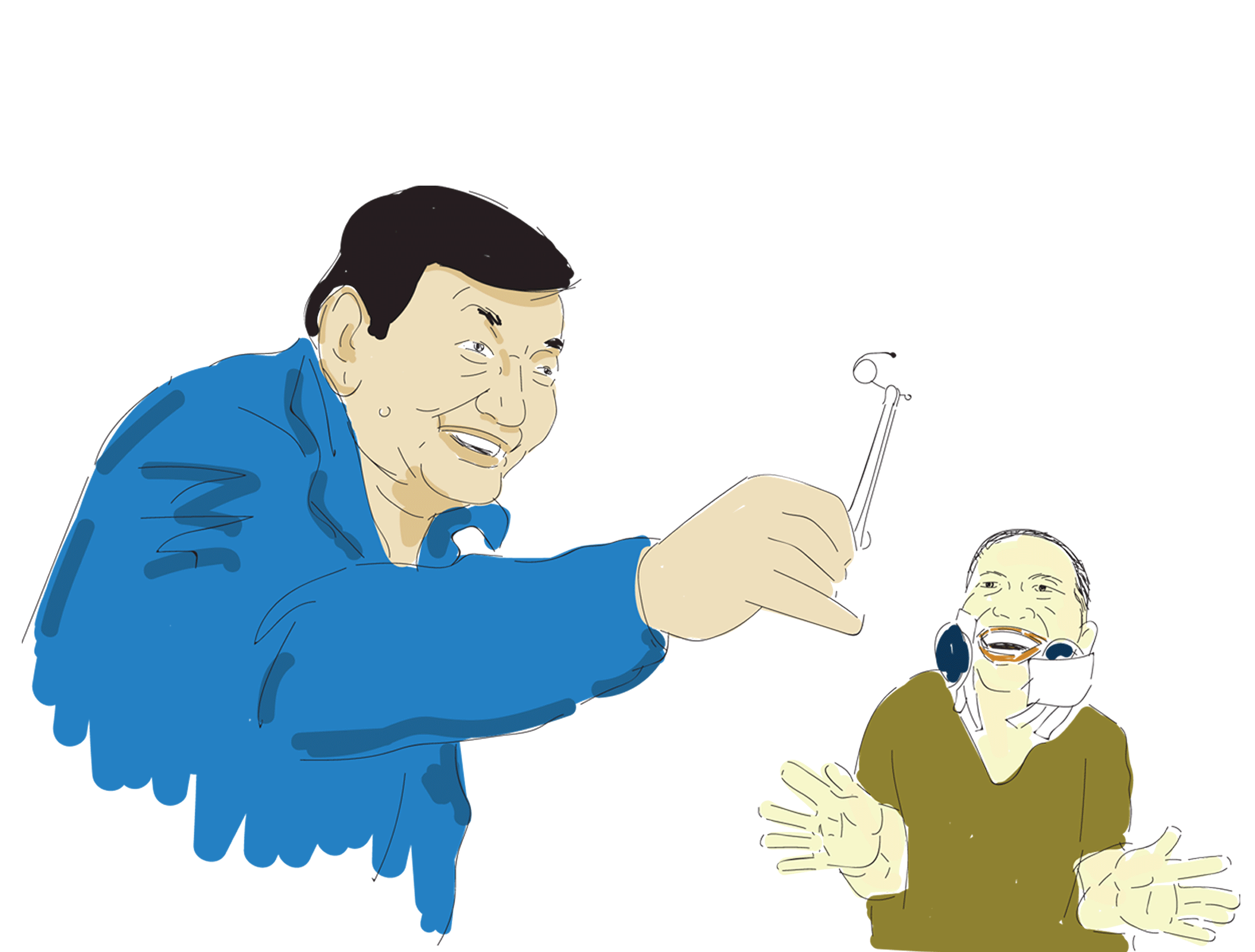
1990 - 2000: Developing a sustainable eye care program in Nepal
1992: Founded the Tilganga Institute of Ophthalmology in 1992, and established the institute as a centre for eye excellence in Nepal – a model for affordable, sustainable high- quality eye care and training doctors and technicians.
Today, thousands of Nepalis receive high quality eye care at affordable prices through Tilganga every day. Tilganga has also developed an Eye bank which procures enough corneas for use in Nepal.
1994: Co-founded the Himalayan Cataract Project with Dr Geoffrey Tabin to expand eye care services, and to end avoidable blindness globally.
1995: Set up an Intraocular Lens Laboratory at Tilganga Institute of Ophthalmology to bring down the cost of the IOL to under USD 3 from USD 150 per IOL, therefore significantly reducing the cost of medical consumables which allowed Dr Ruit and his team to take his life-saving sight restoring surgical technique to thousands of others who could not afford surgery.
Dr Ruit also perfected and fine-tuned the Small Incision Cataract Surgery system – making it simple, affordable, and of high-quality.
1990 - 2000: Developing a sustainable eye care program in Nepal
1992: Founded the Tilganga Institute of Ophthalmology in 1992, and established the institute as a centre for eye excellence in Nepal – a model for affordable, sustainable high- quality eye care and training doctors and technicians.
Today, thousands of Nepalis receive high quality eye care at affordable prices through Tilganga every day. Tilganga has also developed an Eye bank which procures enough corneas for use in Nepal.
1994: Co-founded the Himalayan Cataract Project with Dr Geoffrey Tabin to expand eye care services, and to end avoidable blindness globally.
1995: Set up an Intraocular Lens Laboratory at Tilganga Institute of Ophthalmology to bring down the cost of the IOL to under USD 3 from USD 150 per IOL, therefore significantly reducing the cost of medical consumables which allowed Dr Ruit and his team to take his life-saving sight restoring surgical technique to thousands of others who could not afford surgery.
Dr Ruit also perfected and fine-tuned the Small Incision Cataract Surgery system – making it simple, affordable, and of high-quality.
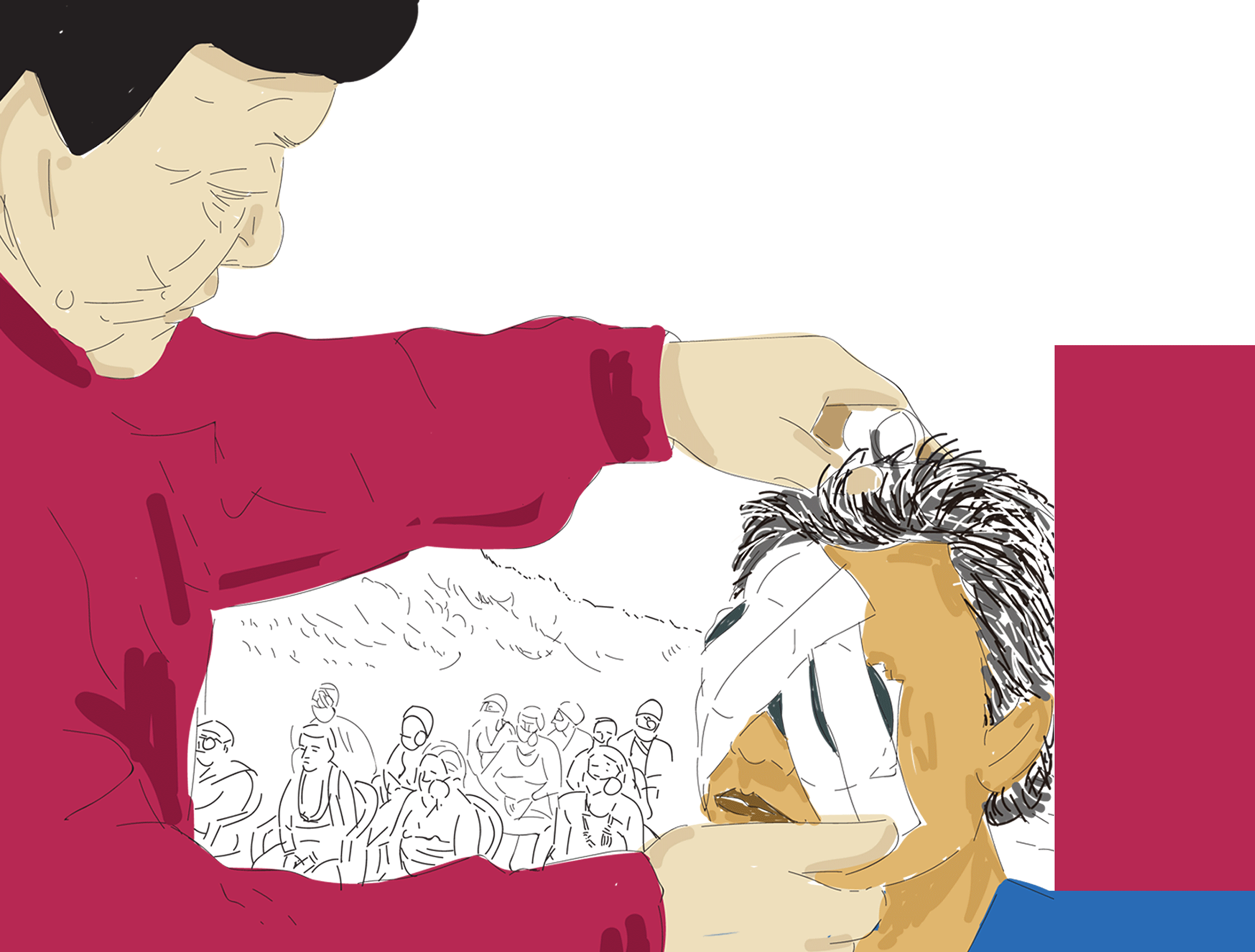
2000 - 2010: Taking sustainable eye care to the community:
Throughout the decade, Dr Ruit and his team from Tilganga Institute of Opthalmology conducted hundreds of Outreach Microsurgical Eye Camps (OMECs) to cure communities of needless blindness.
OMECs were, and continue to be instrumental in clearing the backlog of cataract blindness within the developing world. Requiring intensive coordination, Dr Ruit and his team were able to fine tune the system to achieve higher efficiency and significantly lower the cost per surgery. Prior to setting up the surgical camp, a team in coordination with local level units screens patients for cataracts. Patients identified with cataracts are then invited for surgeries at the camp, wherein the medical team cures large amounts of people with cataracts – therefore successfully curing blindness in the entire region, while keeping costs at a minimum.
From 2000 to 2010, Dr Ruit and his team travelled to remote parts of Nepal, carrying their microsurgical equipment to cure people of needless blindness. Dr Ruit and his team also travelled to several developing countries which include China, Democratic People’s Republic of Korea, Vietnam, Myanmar, Ethiopia, Indonesia, India, Bangladesh, Bhutan, Thailand, and Cambodia amongst others.
The model of such eye care delivery was scaled up in all these countries, along with training and capacity building.
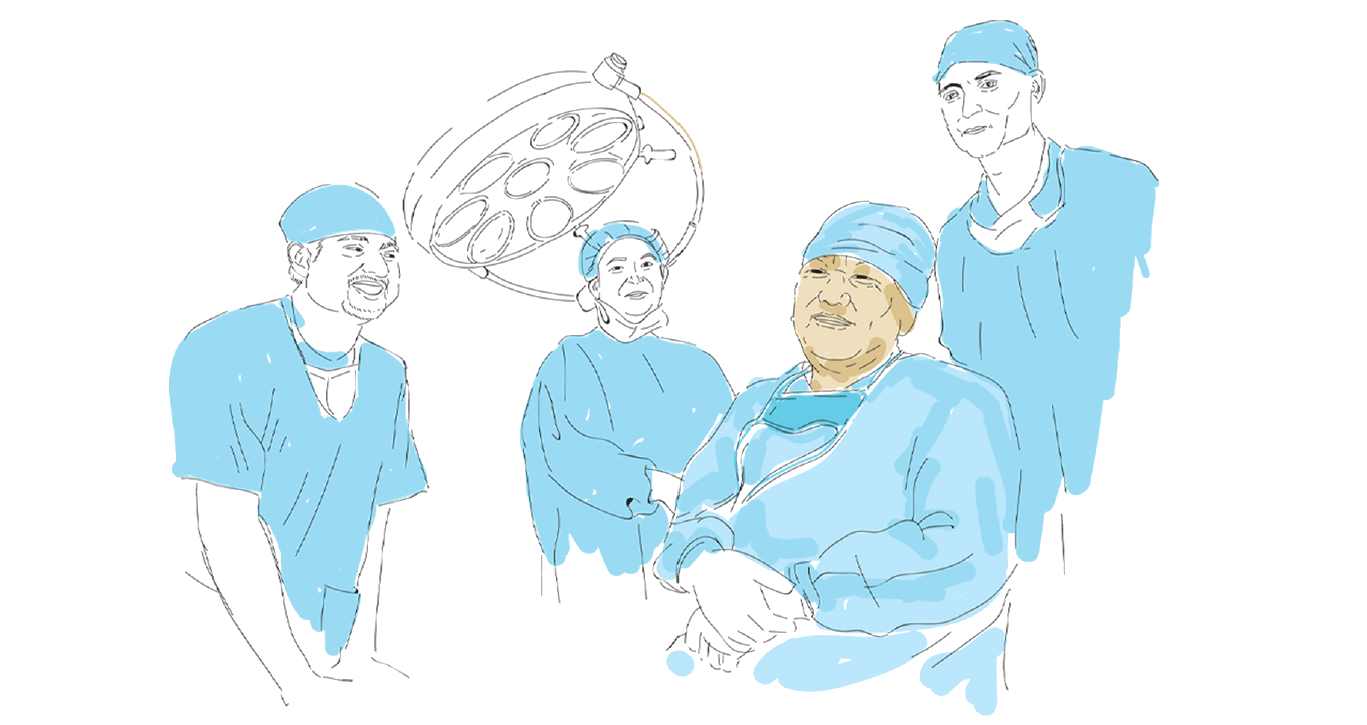
2010 - 2020: Amplifying lifelong work by expanding services
Establishment of community eye hospitals: Under Dr Ruit’s vision to provide sustainable eye care in communities that need them the most, and to eliminate patients living with needless blindness need to travel to Kathmandu or other bigger cities in Nepal, Tilganga Institute of Ophthalmology established several community eye centres in remote districts to enable public access to high quality eye care. Today, Tilganga operates eye care centres in J Dolakha, Makwanpur, Bara, Nuwakot, Solukhumbu, Ramechhap, Rolpa, Mustang and Manang Districts of Nepal.
The next challenge therefore became expanding his effort to take the surgery to other parts of the world. Dr. Ruit could not be everywhere – but his technique could. He began training an army of doctors, who, in turn, today perform surgeries across Asia, Africa, and Australia.
Achievable, very well managed, delivering high quality eye care at the community level – these are sustainable, doing about 4 – 5,000 surgeries in a year, and taking the services to grassroots level. Become very very applicable in many parts of Africa.
2020: Co-founded the Tej Kohli & Ruit Foundation with a mission to screen one million people, and to cure 300,000 – 500,000 of needless blindness by 2030.
2010 - 2020: Amplifying lifelong work by expanding services
Establishment of community eye hospitals: Under Dr Ruit’s vision to provide sustainable eye care in communities that need them the most, and to eliminate patients living with needless blindness need to travel to Kathmandu or other bigger cities in Nepal, Tilganga Institute of Ophthalmology established several community eye centres in remote districts to enable public access to high quality eye care. Today, Tilganga operates eye care centres in J Dolakha, Makwanpur, Bara, Nuwakot, Solukhumbu, Ramechhap, Rolpa, Mustang and Manang Districts of Nepal.
The next challenge therefore became expanding his effort to take the surgery to other parts of the world. Dr. Ruit could not be everywhere – but his technique could. He began training an army of doctors, who, in turn, today perform surgeries across Asia, Africa, and Australia.
Achievable, very well managed, delivering high quality eye care at the community level – these are sustainable, doing about 4 – 5,000 surgeries in a year, and taking the services to grassroots level. Become very very applicable in many parts of Africa.
2020: Co-founded the Tej Kohli & Ruit Foundation with a mission to screen one million people, and to cure 300,000 – 500,000 of needless blindness by 2030.
Dr. Ruit has touched more than a million lives – all because of his unique vision to provide the best eye care for the citizens of the developing world. For his efforts, he has been nicknamed, God of Sight.
